Redwood National & State Parks Guide: Trees, Drives & Best Stops
· By GoldenPath Guide Editorial Team
Park the car, step onto the trail, and look up. That is the moment the redwoods get you. The trunks rise straight and enormous out of a fern carpet, and the canopy closes overhead until the sky is a thin green sliver. Far north, where the fog comes off the Pacific and the rain arrives soft and persistent, the tallest living things on Earth hold their ground. Redwood National and State Parks is a joint federal-state network of four parks strung along the state's north coast, and it keeps them here — cool, hushed, and quiet enough that you start to whisper without meaning to.
The Four Parks, One Forest
The complex is Redwood National Park plus Del Norte Coast, Jedediah Smith and Prairie Creek Redwoods State Parks. Together they guard about 139,000 acres of redwood forest, oak woodlands, rivers and 37 miles of Pacific coast.
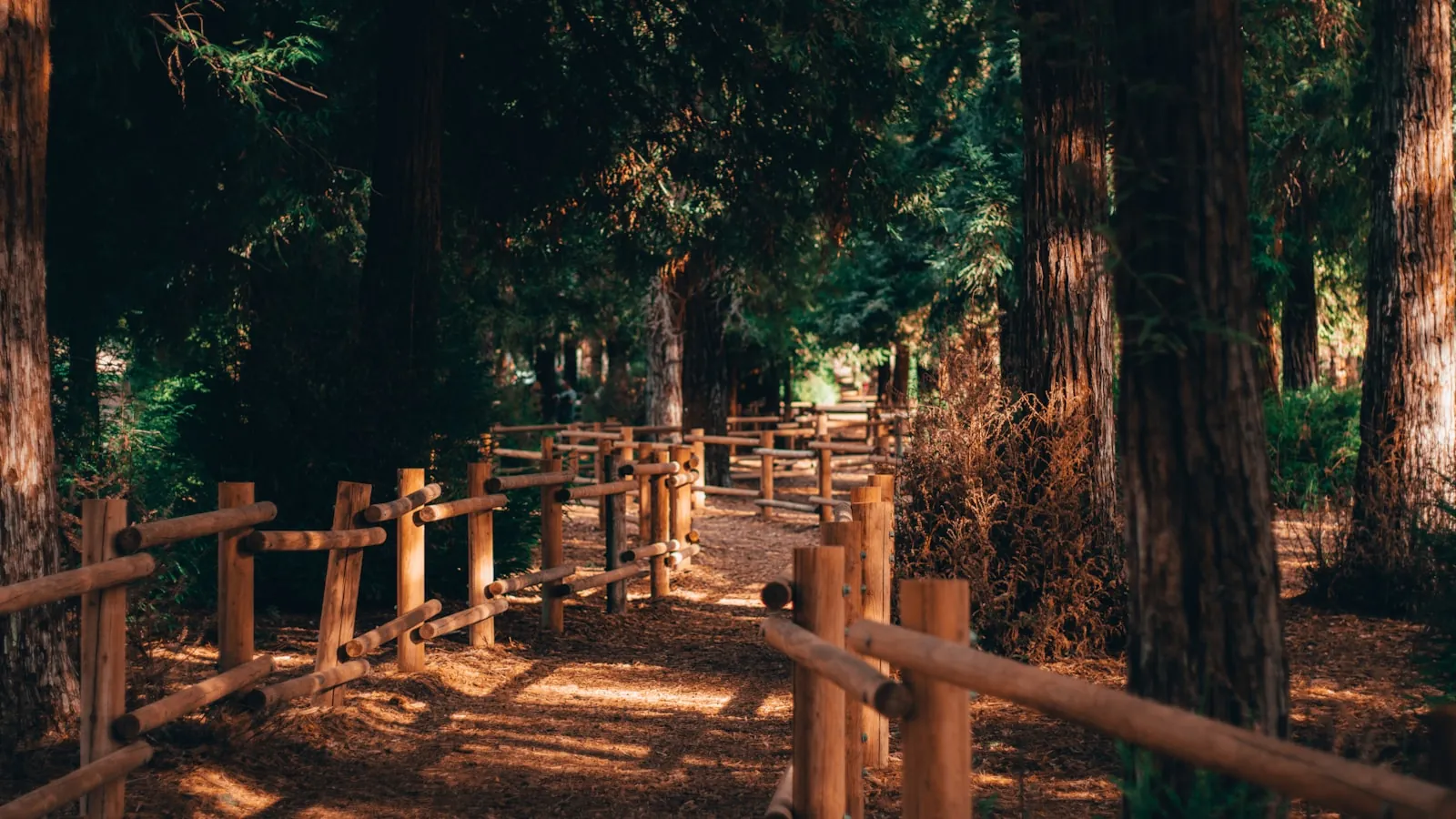
- Jedediah Smith Redwoods — the driest and furthest north, its riverside groves lush and every bit as towering.
- Prairie Creek Redwoods — fern-packed canyons and Roosevelt elk grazing the meadows.
- Del Norte Coast — dense temperate rainforest that runs right down to the sea.
- Redwood National Park — the federally managed heart of the network.
Drives & Scenic Byways
This is a park best seen from behind a wheel, with the windows down and a stop every few minutes.
Howland Hill Road (Jedediah Smith)
A narrow, winding strip of dirt and pavement slides through old-growth redwood and past the famous Stout Grove. It curves, then straightens, then curves again — slow, and all the better for it.
Newton B. Drury Scenic Parkway (Prairie Creek)
Paved and unhurried, running beneath a cathedral of trunks. Roosevelt elk stand in the meadows beside the road, barely glancing up as cars drift past.
Coastal Drive
A cliff-hugging route along the Pacific with sweeping ocean views. Some of it is gravel; all of it is worth the slow pace.
Must-See Sights
- Stout Grove — a celebrated stand on a mossy river flat in Jedediah Smith, and the easiest place to feel the size of the trees.
- Fern Canyon — a gorge walled in bright green ferns; it has stood in for more than one film set.
- Trillium Falls Trail — a short loop through old growth in Prairie Creek.
- Tall Tree Grove and Boy Scout Tree Trail — among the largest trees you can actually reach.
- Gold Bluffs Beach — a remote stretch of Pacific sand edged by redwood bluffs.
Hiking the Redwoods
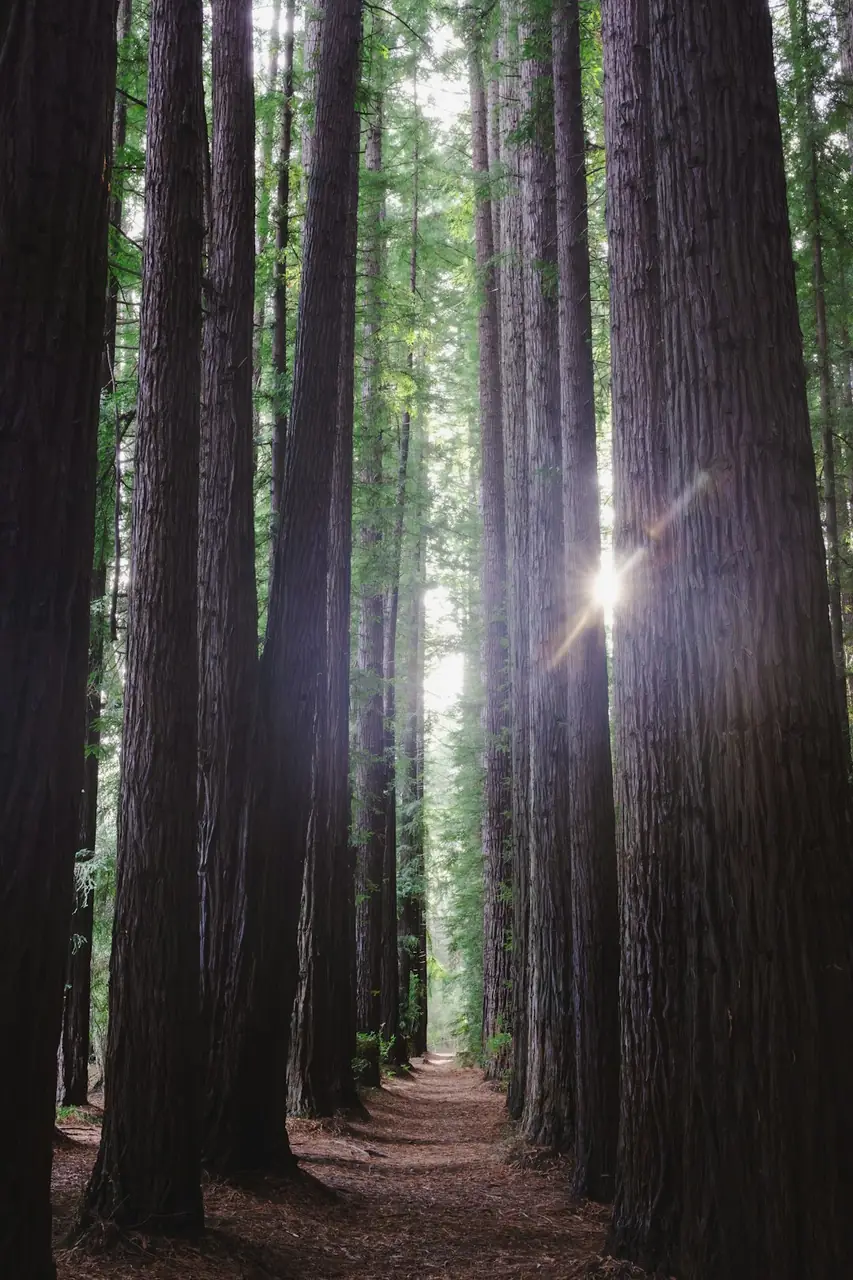
Trails stretch from paved family strolls to backcountry slogs. The Big Tree Wayside, Lady Bird Johnson Grove and the long James Irvine Trail all deliver. Many paths are short and flat, which makes the forest accessible to just about anyone willing to walk.
Best Time to Visit
The north coast leans cool, foggy and wet. Summer (June–September) brings the dry, bright days and the biggest crowds — you will share the trails. Spring and fall settle into comfortable weather with far fewer people. Winter delivers heavy rain, the occasional storm, and the most saturated green in the park, though at the cost of mud and closures.
Extending the Trip: Sequoia & Kings Canyon to Big Sur
If you’re making a grand redwood- and giant-tree loop, the classic extension links the north’s coastal redwoods with the inland giants of Sequoia & Kings Canyon and then down to the cliffs of Big Sur. It’s a big drive, but the variety repays every mile.
- Sequoia & Kings Canyon — the tree-thick groves inland, home to General Sherman, the largest tree on Earth by volume.
- Through the Central Valley — a long but scenic crossing between the two ranges.
- To Big Sur — join the coast at Monterey and follow Highway 1 south into the cliffs.
Practical Tips
- Fill the tank before you arrive. Services thin out fast between the small coastal towns.
- Dress in layers. It can be cool and damp even in July; a rain shell earns its place.
- Base yourself in a nearby town. Crescent City, Klamath and Orick all work well.
- Give the trees room. Stay on the trail to protect the fragile root systems and mossy ground.
- Share the road with elk. They cross the highways and graze the meadows — drive slowly.